Introduction
Interview coordination is crucial to recruitment, keeping candidates, recruiters, and hiring managers aligned to their schedules, requirements, and expectations. Effective coordination helps prevent scheduling conflicts, missed interviews, and hiring delays while creating a positive candidate experience.
Whether interviews are conducted in person, virtually, or across multiple rounds, a structured approach enables organizations to communicate clearly, save time, and make informed hiring decisions.
This blog covers the key steps, best practices, and common challenges of coordinating a successful interview.
What is Interview Coordination
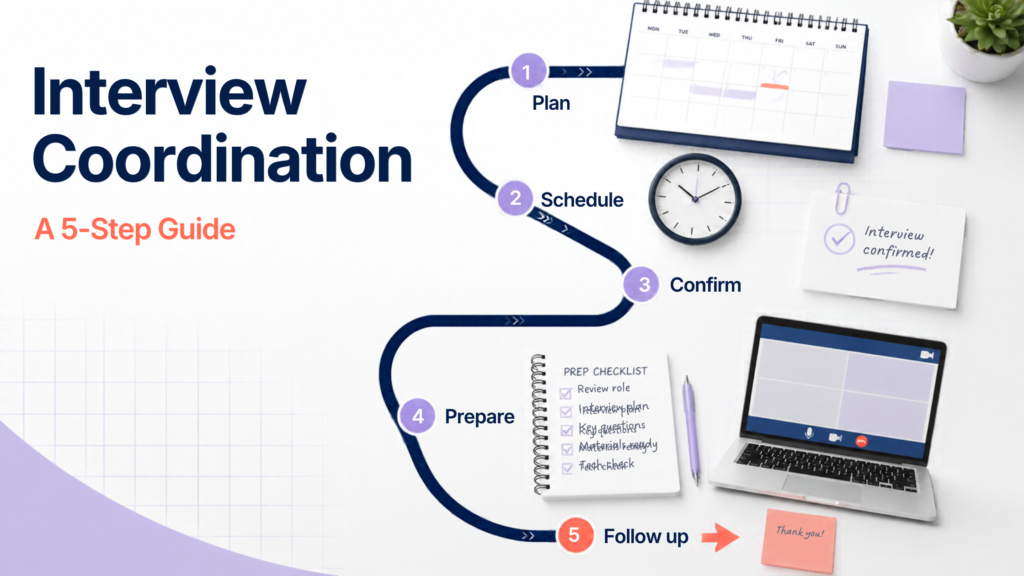
Interview Coordination is the process of organizing, scheduling, and overseeing interviews between candidates and employers to ensure a seamless and efficient recruitment process. It encompasses interview planning, stakeholder communication, and schedule management.
To ensure a smooth interview process, employers and candidates can read and benefit from interview preparation tips discussed in our previous blog on Key Points to Remember in an Interview.
Key responsibilities involved in interview coordination include:-
- Checking the availability of candidates and interviewers.
- Scheduling interviews and sending calendar invitations.
- Sharing the location, day, date, and time for a face-to-face interview. For an online interview, the meeting link should be shared a day prior to the interview. Candidates must join 15 minutes before the interview starts. They must check whether the link is working, must have a solid internet connection, and should also check if their camera is working or not.
- Interview reminders should be sent on the day of the interview. The reminder should be sent 2-4 hours prior to the interview. This reduces the chances of candidates not turning up and gives them sufficient time to prepare or ask any questions.
- Managing rescheduling requests and unexpected changes.
- Collecting interview feedback and communicating next steps.
Effective coordination prevents administrative errors and allows hiring managers to focus on evaluating candidates rather than resolving avoidable screening problems.
Why Is Interview Coordination Important?
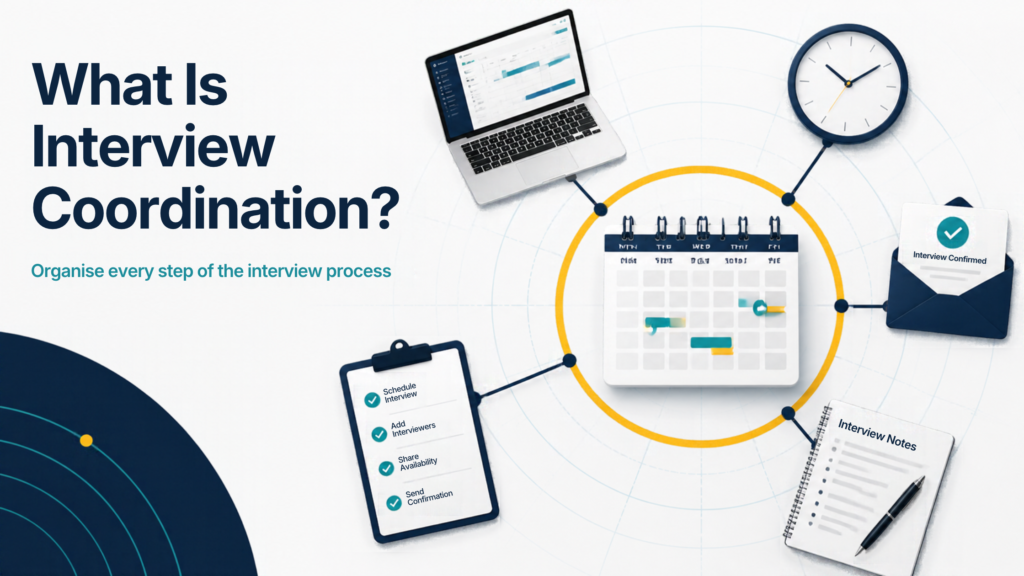
A well-organized interview benefits employers and candidates. It supports better communication, reduces delays, and creates a more consistent recruitment experience.
Creates a Positive Candidate Experience.
The interview process often gives candidates a first impression of an organization’s work culture and professionalism.
Clear instructions, timely responses, and organized scheduling demonstrate that the employer values candidates’ time. Even candidates who are not selected may leave with a positive impression of the organization when the process is handled professionally.
Reduces Scheduling Conflicts
Improves Recruitment Efficiency
Supports Consistent Candidate Evaluation
When interviewers receive a relevant job description, candidates’ CVs, and assessment criteria beforehand, they can conduct a more focused and detailed evaluation.
Use a consistent interview preparation process. This can make it easier for recruiters to compare candidates according to the requirements of the vacancy.
Helps Organizations Make Timely Hiring Decisions
Delays in scheduling interviews or collecting feedback can unnecessarily stretch the recruitment process. Effective interview coordination keeps all the stages organized and helps employers move suitable candidates forward without any unnecessary delays.
5 Essential Steps for Effective Interview Coordination
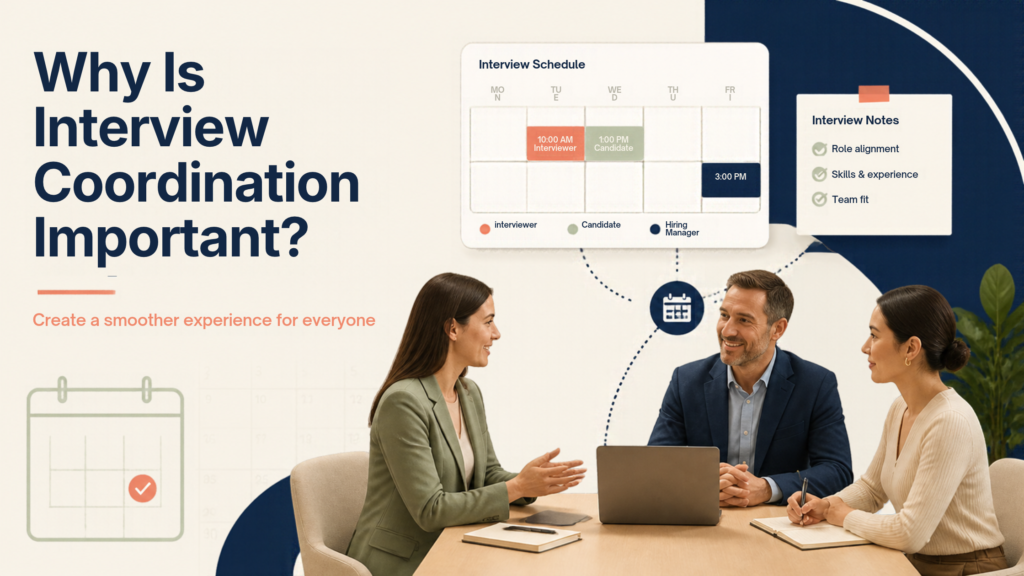
Step 1: Confirm the Interview Requirements:-
Step 2: Coordinate Schedules and Confirm Availability
Once the interview requirements are clear, the next step is to select a suitable time so that the interview can take place between the candidate and the interviewer.
When arranging interviews, first coordinate with the hiring manager and team members to determine their availability. Once a suitable time has been agreed upon, share the interview schedule with the candidate.
Step 3: Communicate Interview Details Clearly
Clear communication is necessary for a smooth recruitment process. Once the interview has been scheduled, send all the candidates a formal invitation. The invitation should include the job title, company name, date, time, interview format, and contact details for assistance.
For in-person interviews, provide the complete office address. For virtual interviews, identify the platform that will be used and share the meeting link with all the necessary details with candidates.
If candidates need to bring documents, keep their portfolio ready, or complete an assessment, then these requirements should be explained in advance.
- Candidate name and position applied for.
- Confirmed date and time.
- Interviewer’s name or designation, where appropriate.
- Office location or virtual meeting link.
- Important documents required
- Instructions for confirming attendance or requesting a change.
- Date: [Insert Date]
- Time: [Insert Time and Time Zone]
- Format: [In-Person/Virtual]
- Location/Meeting Link: [Insert Details]
[Recruiter’s Name]
[Designation]
[Company Name]
Step 4: Set Up the Interview Panel and Meeting Arrangements
Interview Coordination also includes ensuring that the hiring team is prepared to conduct the interview.
Share the candidate’s CV, the relevant job description, and any other supporting documents with the interviewer in advance. This gives them time to review the candidate’s experience and prepare relevant questions that need to be asked of the candidate.
In case of multiple interviewers, their responsibilities and the areas each person will assess must be clarified. This helps avoid repetitive questions and ensures that the discussion covers essential requirements of the role.
For in-person interviews, reserve a meeting room at least a day before the interview. Make sure that all the candidates reach the meeting room for the interview according to the time slots given to them.
For virtual interviews, verify that the meeting link works, the internet connection is strong, audio is clear, and the camera is also working properly.
It is also beneficial to prepare a standard interview evaluation form. This allows interviewers to record their observations and assess candidate suitability on the basis of evaluation criteria provided.
Everything should be prepared before the interview, and nothing should be left for the last minute.
Step 5: Send Reminders and Manage Follow-Ups
After an interview has been confirmed, sending a reminder can help reduce missed appointments and confusion.
Send a short reminder 2-4 hours prior on the day of the interview or 24hours in advance. The reminder should include all the necessary details such as the confirmed date, time, location or meeting link, and other important instructions.
If a candidate requests to reschedule the interview, acknowledge the request promptly and check the hiring manager’s availability before confirming and sharing the new date and time.
After the interview, the recruiter should give feedback to HR and update the candidate’s status in the tracker. If the candidate’s feedback is positive then, he /she should be informed about the next steps according to the employer’s recruitment timeline.
Effective interview coordination is not limited to scheduling interviews. Each step in the process is interconnected, with the success of one step influencing the next step.
Sending timely reminders and managing follow-ups helps reinforce the work completed in earlier stages. This creates a smooth and systematic experience for candidates and recruiters while supporting a more efficient hiring process.
Common Interview Coordination Challenges and How to Handle Them
Even when an interview is well-planned, it is possible that unexpected problems can occur. In such cases, recruiters should be prepared to handle those challenges professionally. These challenges are as follows:-
(a) Last- Minute Cancellation
In most cases, a candidate may become unavailable before the interview that has been scheduled. Recruiters can also be unavailable sometimes.
To mitigate this challenge, the recruiter or other interviewees must be notified in advance. Apologize for the inconvenience and reschedule the interview for a later day and at an alternate time.
Update the calendar invitation and recruitment tracker once the new appointment is confirmed.
(b) Candidates not attending the Interview
If a candidate doesn’t attend the interview, follow the organization’s established procedure. A polite follow-up can establish whether an unexpected problem occurred and whether the candidate remains interested in the position.
Recruiters must make a note of the problem that occurred and reschedule the interview only after confirming the availability of the candidates.
(c) Delayed Interview Feedback
Hiring managers may be occupied with other responsibilities and unable to provide feedback immediately.
Set reasonable expectations for submitting interview evaluations and send professional reminders when the feedback is outstanding. Recruiters must keep the feedback organized. This approach helps prevent delays in communicating recruitment decisions.
(d) Scheduling Across Different Time Zones
International recruitment can often create confusion when participants interpret interview timings differently. As part of Interview Coordination, recruiters should always specify the date, time, and relevant time zone in interview invitations.
This helps prevent missed interviews, scheduling conflicts, and last- minute communication issues. It is also important to verify that calendar invitations display the correct local time for all participants. This is necessary in situations when the recruiters and candidates are based in different countries.
Clear communication when scheduling the interview can contribute to a smoother interview experience and reduce avoidable delays in the hiring process.
(e) Technical Problems During Virtual Meetings
Unstable internet connection, audio issues, and inaccessible meeting links can disrupt interviews and create an unprofessional experience for candidates and recruiters.
Effective Interview Coordination includes checking if the internet connection is strong, testing if the meeting links are working properly, and ensuring that the audio and video are working properly before the interview begins.
Providing clear and accurate joining details can help participants connect without any delays or confusion.
It is also advisable to establish an alternate communication method such as email or phone, in case technical difficulties prevent candidates from joining the meeting.
Responding quickly and calmly to unexpected challenges helps minimize disruption, maintain the interview schedule, and ensure a positive candidate experience.
Strong and timely Interview Coordination can help organizations manage virtual and face-to-face interviews more effectively and reduce the impact of avoidable technical challenges.
Tools That Can Improve Interview Coordination
The right tools can make interview coordination efficient. These tools are beneficial when recruitment teams are handling several vacancies simultaneously. These tools are as follows:-
(a) Digital Calendars: Tools such as Microsoft Outlook and Google Calendar help recruiters manage appointments, check the availability of candidates, and send calendar invitations.
(b) Scheduling Platforms: Dedicated scheduling tools can allow candidates to select from available time slots and reduce repeated email exchanges.
(c) Applicant Tracking Systems: An ATS can help recruiters record candidate details, monitor application stages, and keep interview feedback organized in one place.
(d) Video Conferencing Platforms: Microsoft Teams, Zoom, and other virtual meeting platforms can help in conducting remote interviews.
(e) Spreadsheets: Smaller recruitment teams use a structured spreadsheet to track candidate names, interview dates, confirmation status, attendance, and feedback.
The choice of tool depends on the size of the organization, recruitment volume, budget, and existing systems. Regardless of the technology used, recruiters should ensure that candidate information is handled safely and accessible only to authorized personnel.
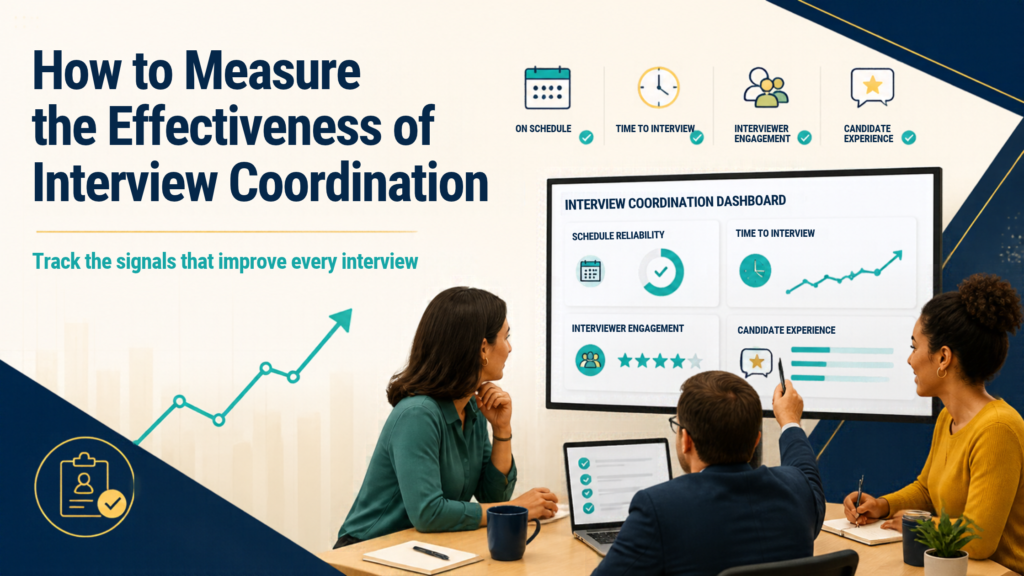
How to Measure the Effectiveness of Interview Coordination
Recruitment teams can evaluate their coordination process by tracking a few practical metrics.
(a) Scheduling turnaround time: Measure how long it takes to arrange an interview after a candidate has been shortlisted.
(b) Interview Attendance Rates: Track the proportion of scheduled interviews attended by candidates.
(c) Rescheduling Frequency: Recruiters must monitor how often appointments need to be changed and identify recurring causes.
(d) Feedback turnaround time: It should be observed and noted how quickly interviewers submit their feedback after an interview.
(e) Candidate communication: Review whether invitations, reminders, and follow-ups are sent within the organization’s agreed timeline.
These indicators can help HR teams identify bottlenecks, improve communication, and make the recruitment process more predictable.
Organizations can monitor metrics such as time-to-hire, candidate experience and interview completion rates to evaluate the effectiveness of Interview Coordination. Employers can also explore recruitment insights, interview coordination tips and best practices through Indeed for Employers.
Conclusion
Effective Interview Coordination helps keep the recruitment process organized, professional, and efficient. By maintaining clear communication and managing schedules effectively, organizations can keep the hiring process on track. Structured interview processes can help reduce delays, improve the candidate experience, and support timely hiring decisions.
Frequently Asked Questions (FAQs)
1. What is interview coordination?
Interview Coordination includes scheduling interviews and communicating with interviewers and candidates. It also includes preparing interview logistics and collecting feedback after the interview to support informed hiring decisions.
2. Why is interview coordination important in recruitment?
Interview Coordination helps reduce scheduling conflicts and minimize communication gaps throughout the hiring process. It can also improve candidate experience and ensure that recruitment progresses effectively and professionally.