
Introduction
Accurate interior fit-out estimation plays a crucial role in ensuring project success, profitability and client satisfaction. In Dubai’s highly competitive fit-out industry, precise cost planning helps contractors deliver quality projects within budget and on schedule.
However, winning interior fit-out projects require more than creative designs and quality workmanship. Contractors must also understand project costs, calculate material and labor requirements, and prepare quotations that balance competitive pricing with profitability. This is the stage where estimation becomes essential.
Fit-Out Estimation is the process of calculating the expected costs, materials, labor, equipment and resources needed to complete a project successfully. It helps contractors prepare accurate quotations and make informed decisions before starting the project.
In a competitive market such as Dubai, an excessively high quotation may cause a contractor to lose a project to their competitor. On the contrary, an extremely low quotation can lead to unexpected expenses and reduced costs during execution.
Accurate fit-out estimation helps interior fit-out contractors to maintain the right balance between winning projects and maintaining profitability. It also improves cost transparency, supports better planning and builds client confidence.
This blog explores why estimation is one of the most important activities for securing more interior fit-out projects in Dubai and how contractors can improve their estimation process.
Table of Contents
What Is Fit-Out Estimation in Interior Projects?
Estimation involves calculating the expected expenditure required for completing an interior fit-out project. Depending on the scope, this may everything from material procurement, labor, subcontracting, transportation, equipment, installation, site preparation and to other project-related expenses.
For example, an office fit-out project in Dubai may involve flooring, ceilings, glass partitions, electrical systems, lighting, painting, joinery and furniture installation. Each activity has different material requirements, labor costs and installation procedures.
An estimator is responsible for reviewing the drawings, technical specifications and bill of quantities (BOQs), and scope to determine the resources required and calculate costs.
A comprehensive estimate generally includes the following details:-
- Material costs: Flooring, paint, glass, timber, gypsum boards, lighting fixtures, tiles, and hardware.
- Labor costs: Installation teams, specialist workers, subcontractors, and supervision.
- Equipment and machinery: Tools, access equipment, and other resources required for execution.
- Transportation and logistics: Delivery charges, material handling, storage, and site access arrangements.
- Site expenses: Temporary facilities, protection measures, safety requirements, and project administration.
- Approvals and compliance: Applicable approval, inspection, testing, and documentation costs.
- Contingencies: Reasonable allowances for identified risks and uncertainties.
- Overheads and profit: Business operating expenses and the margin required to make the project commercially viable.
By calculating the cost of all these elements carefully and systematically, contractors gain a clearer understanding of the financial commitment involved before submitting a quotation.
The interior fit-out sector offers a wide range of career opportunities, from project management and quantity surveying to estimation and site supervision. Discover some of the most in-demand roles in our blog on Top 10 Rewarding Interior Fit-Out Jobs in UAE.
Importance of Estimation in Securing More Projects
(a) Helps Prepare Competitive Quotations
Price is an important factor to be considered when clients are comparing the interior fit-out contractors. However, it is not guaranteed that the lowest quotation will always help in winning the project. Clients may also consider other factors such as workmanship, material quality, technical expertise, delivery schedule and the contractor’s ability to meet their requirements.
Accurate fit-out estimation helps contractors to calculate a price that reflects the actual scope of work while remaining competitive.
For example, one contractor might overlook transportation, specialist installation or subcontracting expenses. This would lead to a lower initial quotation. In the meantime, another contractor may calculate these costs correctly and submit a more comprehensive proposal.
The second quotation might appear higher. However, it provides cost transparency and reduces the chances of unexpected charges later.
By estimating costs correctly, contractors can avoid unnecessary increase in price. They can submit quotations that reflect the value of their services.

(b) Protects Project Profitability
Winning a project is beneficial only when the contractor can complete it without comprising quality.
Underestimating material quantities, labor requirements, or installation expenses can create financial difficulties during execution. Furthermore, to mitigate these challenges, contractors may have to absorb additional cost or accept reduced margins.
For example, failing to account for a customized joinery or additional electrical work can result in a quotation that doesn’t cover the actual expenditure.
Accurate estimation plays a crucial role in identifying these expenses before the contract is signed. On the basis of this estimation, contractors can calculate appropriate pricing and determine whether the project is commercially viable.
Maintaining profitability across projects helps businesses remain financially stable. It also enables fit-out companies to invest in skilled employees, equipment, technology and improved services.
(c) Builds Client Confidence
Clients seek clear visibility into how projects costs are allocated and the value they will receive in return. A detailed quotation reflects a contractor’s thorough assessment of the project requirements and demonstrates a commitment to transparency.
Instead of presenting only a lump-sum figure, contractors can provide a structured breakdown. This breakdown should include major work categories and material specifications.
This transparency allows clients to compare proposals and clarify their expectations before starting the fit-out project.
It also reduces the possibility of disagreements about the scope of work or additional charges. A professional fit-out estimation process can strengthen client relationships and encourage repeat business.

(d) Reduces Unexpected Expenses
Uncertainties are a part and parcel of interior fit-out projects. These can include incomplete drawings, existing site conditions, material availability, design changes and coordination with other contractors.
If these factors are ignored during estimation, the original quotation may not reflect the actual cost of completing the work. A thorough estimation process helps in identifying potential risks and clarifying which costs are included in the proposal.
For example, contractors should confirm whether relocating electrical points, disposing of construction waste or obtaining specific approvals fall within the agreed budget and scope of project.
Clarifying these requirements before submitting the quotation helps minimize avoidable financial expenses.
Seven Factors to Consider during Fit-Out Estimation
1. Project Scope and Specifications:–
A reliable fit-out estimation begins by carefully analyzing the architectural drawings, interior design plans, BOQ, technical specifications and tender documents. This ensures that all project requirements are clearly understood by the contractors.
Contractors must understand the work included in the contract and any items outside its scope. Missing information and conflicting specifications must be clarified before the quotation is finalized.

2. Material Quantities and Prices
Materials can account for a substantial proportion of an interior fit-out estimation. Flooring, tiles, glass partitions, lighting, paint and decorative finishes can vary considerably in price.
Estimations should calculate quantities from available drawings. These estimates must also include costs related to wastage, cutting requirements and installation methods.
They should obtain updated supplier quotations and verify product availability. Imported or customized material may require a delivery schedule and allowances for transportation.
3. Labor and Sub Contracting Costs
Different fit-out activities require different skills. Electrical installation, plumbing, HVAC modifications, carpentry, painting, and joinery may require separate teams or subcontractors.
Estimators should assess the number of workers required, expected working hours, productivity and applicable rates.
They are also responsible to consider site restrictions and coordination requirements that could affect labor productivity.
4. Project Location and Site Conditions
The location and condition of a project can influence transportation, material handling, labor productivity and installation costs.
For example, to work inside an occupied office building may require phased execution, restricted working hours, additional protection measures or coordination with building management.
Site inspections and early discussions with the relevant parties play a crucial role in fit-out estimation. It helps estimators to identify project requirements before finalizing the estimate.
5. Approvals and Compliance Requirements
Depending on the project’s location and scope, fit-out projects in Dubai may require approvals or coordination with relevant authorities such as developers, landlords and builders.
Estimators should identify applicable requirements. They must confirm who is responsible for associated costs and documentation.
Requirements may vary depending on the property and project type. In such cases, contractors must verify the applicable obligations rather than assuming every project follows the same process.
6. Project Duration and Delivery Schedule
The project timeline can have an impact on labor, supervision, equipment rental and other time-related expenses.
Estimators should consider the client’s deadline, material lead times, subcontractor availability and the sequence of installation activities.
In Fit-Out Estimation, if there is a requirement for workers to do extra shifts and additional resources, then these costs should be evaluated before the quotation is submitted.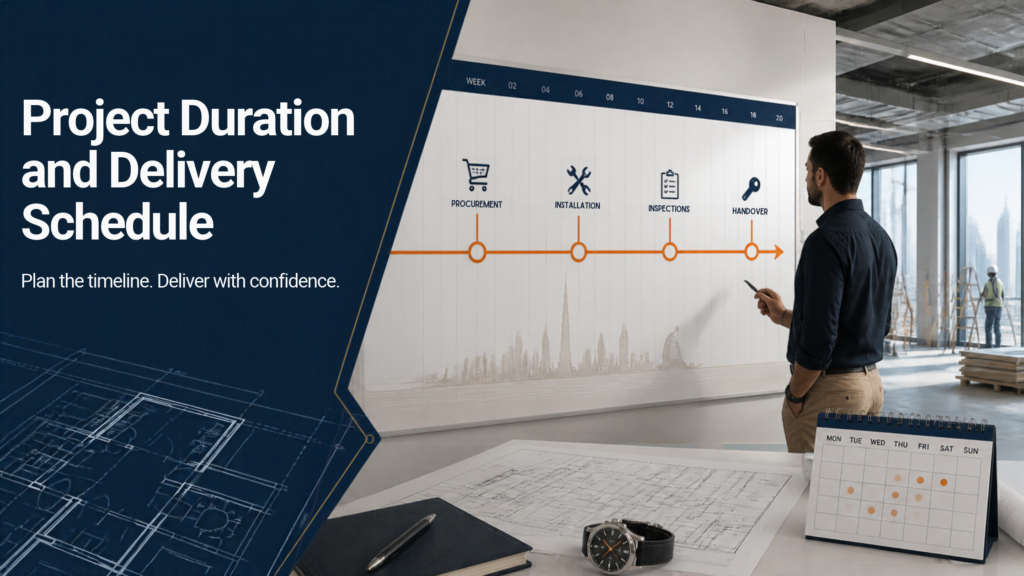
7. Overheads, Contingencies and Profit Margins
The final estimate should include relevant business overheads, project specific expenses and an appropriate profit-margin.
Contingencies should reflect identifiable risks rather than added arbitrarily. Furthermore, assumptions and exclusions should also be documented clearly and professionally.
A realistic pricing structure enables contractors to remain competitive and avoid them from accepting projects that may create unnecessary financial pressure.
How Technology Improves Estimation Accuracy

Technology can help interior fit-out contractors prepare estimates more efficiently and reduce manual errors.
Spreadsheet applications such as Microsoft Excel are useful for calculating quantities, organizing supplier quotations, comparing costs and applying mark-ups. Standardized templates also make the estimation process more consistent.
For large projects, quantity take-off tools and Building Information Modelling (BIM) software can help extract quantities from digital drawings and coordinate information across different disciplines.
Furthermore, estimation and project management software can help businesses maintain historical cost data, monitor material prices and compare estimated expenditure with actual project costs.
Despite these advantages, technology cannot replace professional judgement. Estimators must verify the information entered into the systems, review drawings carefully and keep a track of project-specific requirements.
Combining appropriate digital tools with technical expertise and systematic checking can improve both accuracy and efficiency of the fit-out estimation process.
Common Estimation Mistakes to Avoid
Even experienced contractors can make mistakes when preparing quotations. Recognizing these issues, helps businesses to improve their bidding process. These issues are as follows:-
(a) Ignoring small expenses:- Transportation, consumables, waste disposal and rental equipment can affect collectively affect the project budget.
(b) Using outdated supplier prices:- Contractors must discard old quotations because they may not reflect current material costs or availability.
(c) Misinterpreting the scope of work:- It is one of the most common and costliest mistakes. Missing items or unclear assumptions can lead to disputes and unexpected expenses.
(d) Underestimating labor requirements:- Estimating fewer labor hours than actually required can increase project costs and extend the construction schedule also. This can affect the completion of the project.
(e) Rushing the final review:- The final review is an important step in the estimation process. If it is done in a hurried and rushed way, then it can lead to incorrect calculations, duplicated items, missing quantities, and inaccurate mark-ups may go unnoticed. This can lead to an unreliable project estimate.
Accuracy and reliability of a fit-out estimation can be improved by using standardized checklists, independent quotation reviews and clearly defined and approved responsibilities.
How Contractors Can Use Estimation to Win More Projects
Accurate calculations are essential but contractors must also present their estimates in a way that supports client-decision making.
Firstly, prepare quotations that are easy to understand. Organize pricing into relevant categories and clearly identify the scope, specifications, assumptions, exclusions and payment terms.
Secondly, respond promptly to tender invitations and client enquiries. An organized estimation process helps teams meet submission deadlines without compromising on accuracy.
Thirdly, consider suitable alternatives when a client’s budget is limited. Contractors may suggest alternative material, finishes or installation methods. They may meet the required performance and quality standards.
Fourthly, contractors must maintain relationships with reliable suppliers and subcontractors. Updated quotations and dependable supply arrangements can help estimators come up with a realistic price.
Fifth, review completed projects to compare estimated cost with actual expenditure. This helps identify recurring errors, improve productivity assumptions and strengthen future bids.
Finally, contractors must track the bidding performance. Record the number of quotations submitted, projects won, reasons for successful bids and actual project margins. This information helps businesses identify which project categories offer the strongest commercial opportunities.
The objective is not limited to only submitting quotations. It is to submit accurate quotations for projects that match the company’s capabilities and financial objectives.

Conclusion
Dubai’s interior fit-out industry offers significant opportunities for contractors who deliver quality work, competitive pricing and reliable project execution.
Accurate fit-out estimation plays a crucial role in achieving these objectives by helping contractors assess project costs, labor requirements, materials, risks and overheads realistically.
By using appropriate estimation tools, maintaining cost and continuously improving their estimating practices, businesses can prepare more accurate quotations.
Furthermore this will improve productivity, reduce project risks and build a sustainable competitive advantage in the market.
Ultimately, effective fit-out estimation is not only about calculating costs but also about supporting informed decision-making and successful project delivery. For interior fit-out contractors in Dubai, it remains an essential factor in achieving long-term growth, profitability and business sustainability.
Frequently Asked Questions (FAQs)
What is fit-out estimation?
Fit-Out Estimation is the process of calculating cost, labor requirements, material quantities, overheads and project risks for an interior fit-out project. It helps contractors prepare accurate quotations and plan projects more effectively.
What factors affect fit-out estimation in Dubai?