Introduction
In today’s competitive job market, candidates often benefit from professional career guidance and recruitment support to improve their job search strategies and interview readiness.
Whether you are a fresher attending your first interview or an experienced professional exploring new opportunities, preparation can help you make a positive impression. From researching the company to communicating confidently, a few essential practices can make the interview process more manageable.
This blog outlines 10 key points to remember in an interview. These points will help candidates strengthen their Interview Preparation so that they can speak confidently and clearly in front of the interviewer.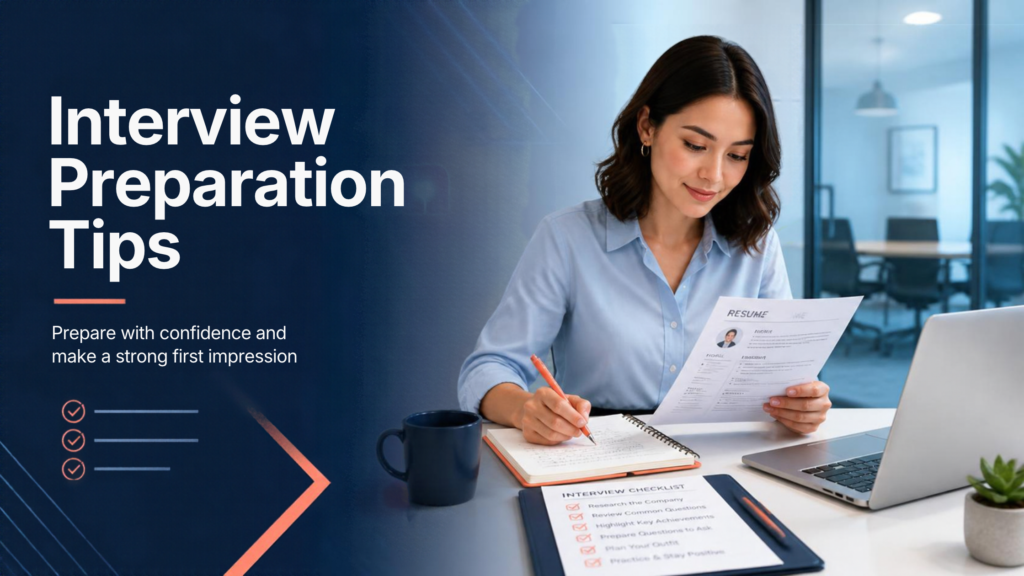
10 Essential Interview Preparation Tips for Success
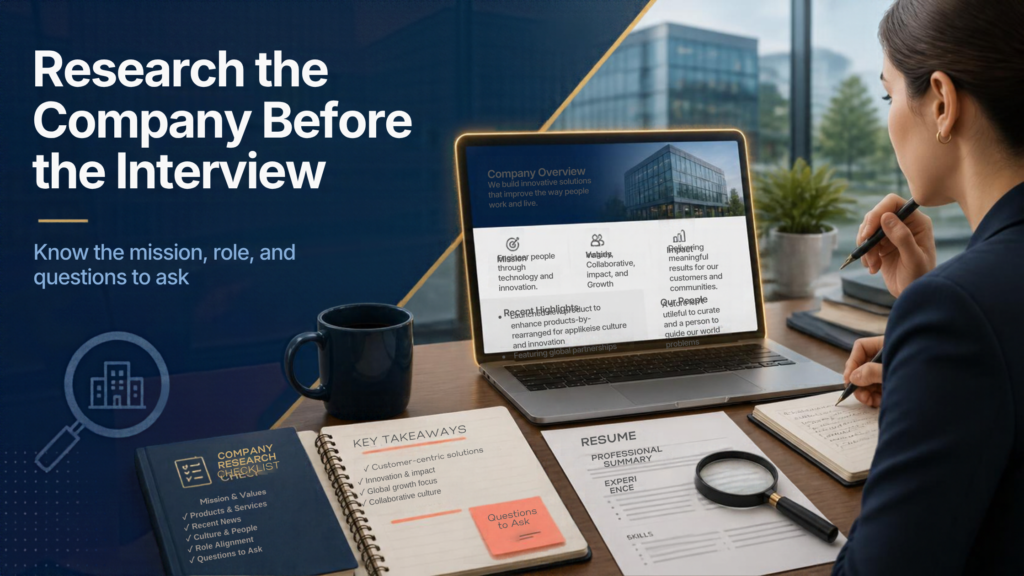
Research the Company Before the Interview
Before an interview, the most important step is to research the company thoroughly. Employers highly value candidates who show interest in the company and understand its operations.
To know more about the company’s services, industry, mission, and values, candidates must go through the company’s official website. Further, to know more about the activities and professional presence, candidates can go through the social media profiles of the company.
For example: A candidate applying for a digital marketing role should explore the company’s website and social media channels. This will help the candidate understand its content strategy, digital presence, and audience engagement.
Understand the Job Description
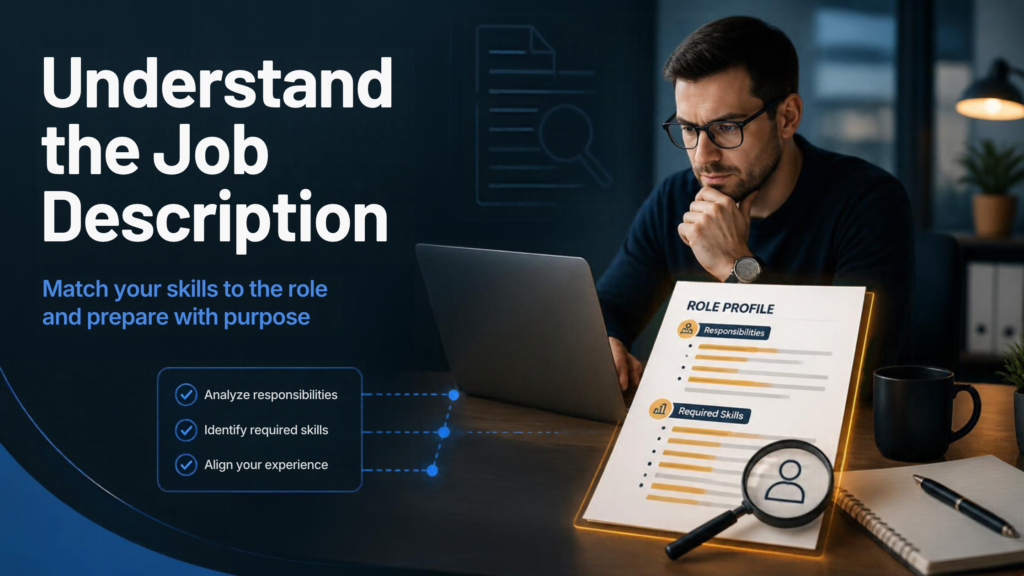
Candidates must thoroughly read and understand the job description before going to the interview. It describes the responsibilities, qualifications, experience, and skills required for the role.
Identify the key requirements and think about how your experience aligns with these qualifications. The next step is to prepare a portfolio that comprises work done in previous organizations, internships, volunteer work, and relevant school projects.
Consider a scenario where you worked with a team to complete a task. For example, if a team is a necessity, then explain a situation where you tackled a problem and worked towards a solution. Being able to come up with a solution to the problem demonstrates problem-solving skills, which might also be a requirement for the position.
Understanding the job description is a crucial part of Interview Preparation. It helps candidates to get a clarity about the role, required qualifications, responsibilities and employer expectations. By carefully reviewing the job description, candidates can identify how their skills, experience, and achievements align with the position and tailor their responses accordingly.
Interview Preparation includes carefully analyzing the job description, which helps candidates to speak confidently and highlight their relevant skills, experience and qualification during the interview.
Researching the company, its industry, and the specific role can help candidates better understand employer expectations and tailor their responses during the interview.
Prepare for Common Interview Questions
It is impossible to predict every question an interviewer may ask. However, preparing for commonly asked interview questions can help candidates organize their thoughts and structure their responses.
Some frequently asked questions include:-
- Tell me about yourself.
- Why do you want to work for our company?
- What are your strengths and weaknesses?
- Why should we hire you?
- What do you know about this position?
- Describe a challenge you faced and how you handled it.
- What are your career goals?
- What are your salary expectations?
Prepare clear and concise answers that highlight your skills, relevant experience, and professional goals. Candidates must avoid memorizing their answers word for word. This may create a negative impression, and it might feel that the answers are rehearsed.
For questions about previous experiences, candidates must use the STAR method: Situation, Task, Action, and Result. When following this method, candidates must explain the situation, describe their responsibility, describe the steps taken, and the achieved outcome.
For example, if a candidate is asked about a challenging assignment, they should briefly explain the problem and the steps taken to resolve it. They can also share the results achieved and what they learnt from the experience.
Practicing your answers aloud is a great way to improve your delivery and be confident when answering the employer’s questions.
Candidates should review and practice answering commonly asked questions to improve their confidence, structure their responses effectively, and communicate their qualifications clearly during the interview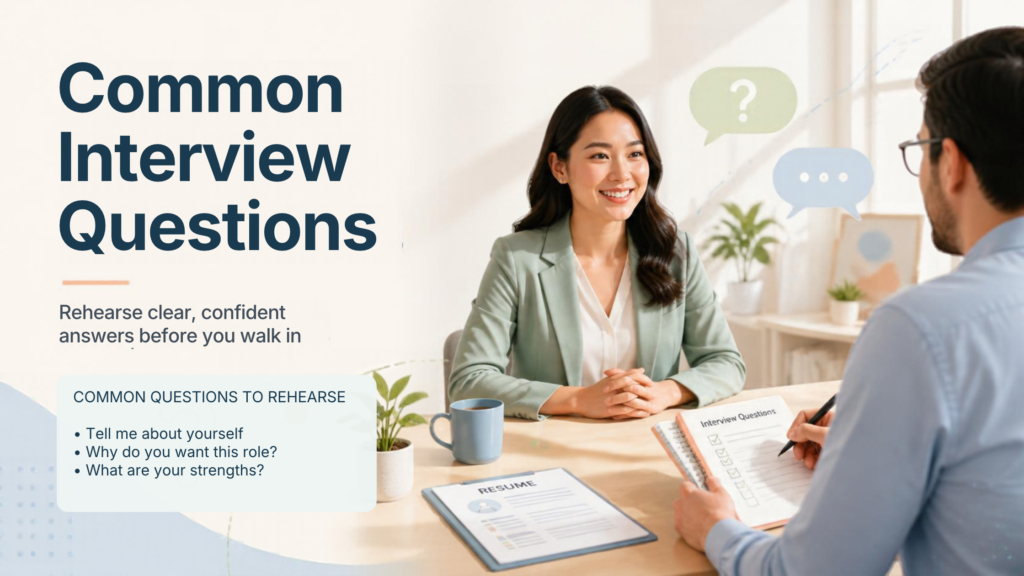
Dress Professionally and Arrive on Time
Appearance and punctuality contribute to the first impression that a candidate makes during an interview. Both demonstrate that the candidate takes the opportunity seriously and respects the interviewer’s time.
Candidates must dress professionally when they come to attend an interview. Formal business attire is appropriate for interviews. Candidates must ensure that their clothes are neat, clean, and comfortable.
Punctuality is also an important factor. Candidates must plan their journey by confirming the interview time and location beforehand. Allow extra travel time to account for unexpected traffic, route changes, or other unexpected delays. This ensures that candidates are on time and prepared for the interview.
Many candidates feel that dressing professionally and being punctual are absolutely unnecessary. However, it is an important part and can create a positive impression before the interview begins.
These steps demonstrate professionalism, preparedness, and respect for the employer’s time. Dressing professionally and arriving on time is one of the most valuable interview tips, which can set the right tone for an interview.
Carry the Necessary Documents
Prepare documents such as your CV and portfolio so that you can feel more confident, organized, and avoid last-minute stress.
Depending on the employer’s instructions and role, candidates may carry the following documents:-
- Updated copies of your CV or resume.
- Educational certificates and professional qualifications.
- A portfolio having samples of your work.
- Identification or other documents specifically requested by the employer.
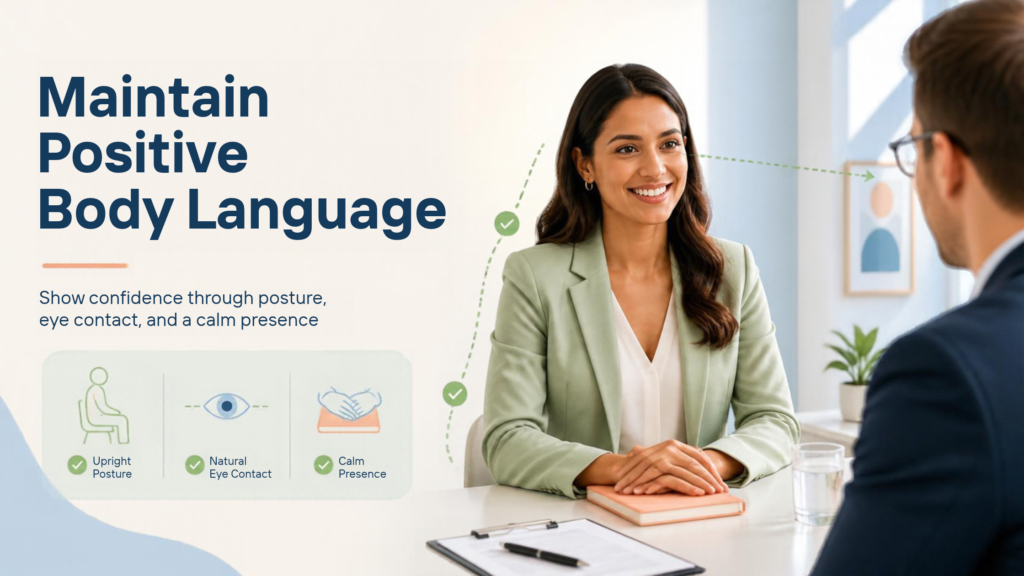
Maintain Positive Body Language
Communicate Clearly and Highlight Your Skills
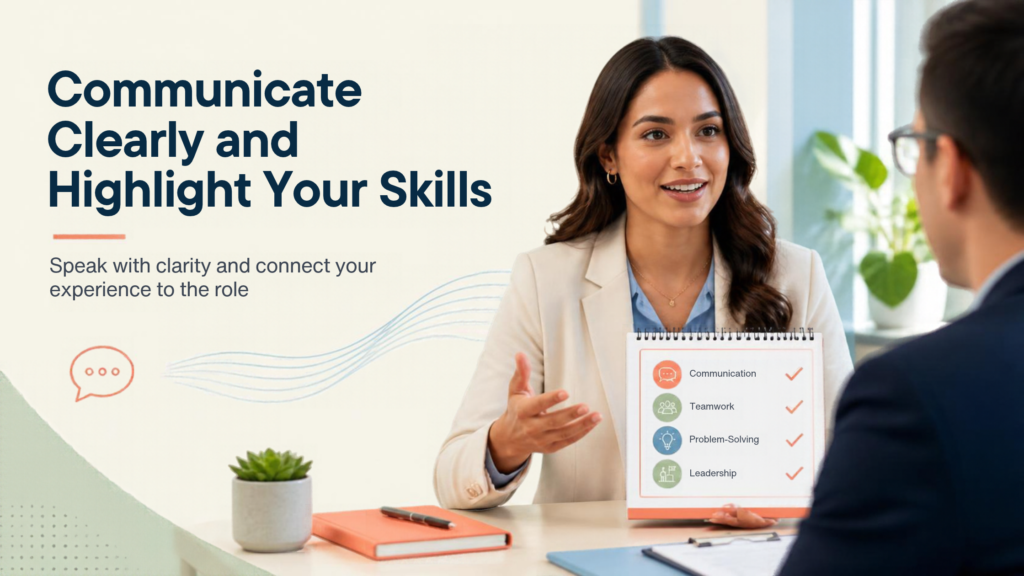
Effective communication is one of the most important qualities you can demonstrate during an interview. Employers want to understand your experience, how you approach tasks, and how you could contribute to their organization.
Candidates should speak at a normal pace and structure their answers logically. Avoid unnecessarily complicated language, vague statements, or lengthy explanations that move away from the question. Listing your skills is not enough. Candidates should be able to explain their skills and how they have applied those skills during their previous internship.
For example, instead of saying, ” I have good organizational skills,” candidates must describe how they have managed multiple deadlines, coordinated a project, or maintained an accurate record of tasks.
Candidates should be honest about their qualifications and experience. Candidates should not exaggerate their achievements or claim expertise in skills they have not developed.
Communicating effectively and confidently showcasing your skills is an important part of interview preparation. Clear communication helps candidates present their qualifications and experience.
Demonstrate a Positive Attitude and Willingness to Learn
Employers often look for candidates who can work collaboratively, adapt to changing situations, and respond constructively to challenges.
During the interview, demonstrate enthusiasm for the position and a willingness to learn. Speak respectfully about previous employers, colleagues, and teammates, even if you have experienced difficulties in the previous workplace.
For fresh graduates and candidates with limited experience, curiosity and a willingness to learn new skills can be particularly valuable.
A positive attitude does not mean pretending that challenges do not exist. It means approaching them professionally, taking responsibility, and learning from experience.
Employers value candidates who recognize areas for growth while demonstrating the motivation to improve.
Ask Relevant Questions at the End
Most interviewers allow candidates to ask questions. Candidates must use this time to understand the position, clarify expectations, and determine whether the opportunity aligns with their career goals.
Prepare two or three relevant questions in advance. Depending on what has already been discussed, you could ask:-
- What would be the main priorities for someone joining this role?
- How would you describe the team’s working culture?
- What does success look like during the first three months?
- What learning and professional development opportunities are available?
- What are the next steps in the recruitment process?
These questions demonstrate interest and help you make an informed decision.
Listen carefully throughout the discussion so that you do not ask questions that have already been answered.
It is also reasonable to ask about salary, benefits, working hours, and other employment conditions at an appropriate stage. If candidates understand these details properly, then they can make an informed decision.
An interview is always a two-way communication. While the employers assess your suitability, you should also evaluate whether the role and organization meet your expectations.
As part of their interview preparation, candidates should prepare thoughtful and relevant questions for the interviewer. This shows curiosity, a willingness to learn, and genuine interest in the role, helping create a positive impression and improve their chances of selection.
Avoid Common Interview Mistakes
Sometimes, even the most well- qualified candidates can weaken their interview performance by avoiding these common mistakes. Candidates must keep the following things in mind so that they can prepare more effectively. Some of the most common interview mistakes are as follows:-
- Arriving late without notifying the recruiter.
- Attending without researching the organization.
- Giving vague or irrelevant answers.
- Interrupting the interviewer
- Speaking negatively about previous employers.
- Exaggerating skills, qualifications, or achievements.
- Checking your phone or multitasking during the interview.
- Appearing uninterested or unprepared.
- Failing to ask relevant questions.
- Ignoring instructions provided by the recruitment team.
Another common mistake is assuming that every interview follows the same format. Some employers conduct structured interviews, while others may include technical questions, practical assessments, or multiple rounds.
Candidates must maintain a professional attitude throughout the entire interview process. Being professional and flexible during the interview shows adaptability and the ability to handle different situations effectively. As an important aspect of Interview Preparation, maintaining professionalism helps candidates create a positive impression on interviewers and showcase their willingness to contribute to the organization’s success.
Conclusion
Effective Interview Preparation involves more than just answering questions. It includes researching the role, understanding the job description, preparing relevant documents, communicating confidently, maintaining professionalism, and following up after the interview.
By learning from each experience and continuously improving their approach to interview preparation, candidates can strengthen their interview skills, make a positive impression on employers, and move closer to securing the right career opportunity.